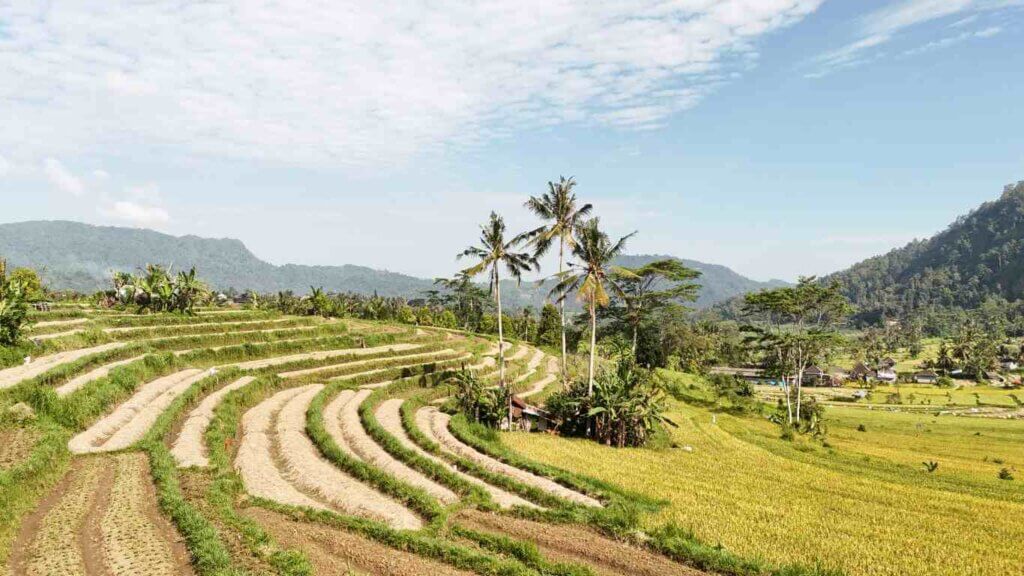
Discover The Secrets Of Rice Harvesting In Bali That Few Tourists Know

Discover The Secrets Of Rice Harvesting In Bali

That Few Tourists Know


When you think of Bali, one of the first images that comes to mind is surely its rice fields — those green mosaics that look like they’ve been hand-painted across hills and valleys. But behind those postcard-perfect landscapes lies an ancient history and a fascinating agricultural technique that’s absolutely worth discovering if you really want to understand how rice cultivation and rice harvesting in Bali work on the Island of the Gods.

In this article, I’ll talk about:

The History Of Rice In Bali: A Thousand-Year-Old Connection

Rice harvesting in Bali isn’t just food—it’s practically a religion. It arrived in Indonesia thousands of years ago and immediately became the beating heart of Balinese life, both from a nutritional and cultural point of view. It’s no coincidence that rice plays a starring role in countless ceremonies and rituals, symbolizing fertility, abundance, and connection with the gods.

Traditional Balinese rice cultivation is closely linked to a system known as subak, an ancient method of communal water management for irrigating rice fields. This system is so important and unique that it’s been declared a UNESCO World Heritage cultural landscape. The special thing about the subak system is that it involves the entire community: water is shared fairly among farmers following precise rules, maintaining a delicate balance between nature, religion, and collective labor. And all of this, of course, plays a crucial part in rice harvesting in Bali.

How Bali’s Rice Fields Work: Terraces And Irrigation

The rice fields in Bali are famous for being cultivated on terraces, especially in hilly areas like Sidemen or Jatiluwih. This technique makes the most of the island’s natural landscape, slowing down the flow of water and keeping the soil fertile and moist. The terraces are masterpieces of agricultural engineering: each level works like a small basin that holds water and lets the rice plants grow lush and healthy. It’s all part of the magic behind rice harvesting in Bali.

Irrigation is truly the lifeblood of Bali’s rice fields. The subak system channels water through a network of natural canals and small dams, guiding it from rivers and springs directly to each rice field. Farming families take turns maintaining and cleaning these canals, which are essential for the survival of the crops and for ensuring a successful rice harvesting in Bali season.

rice harvesting in Bali

Rice Harvesting In Bali: A Ritual And A Team Effort

When the time for rice harvesting in Bali arrives, the whole village comes together. Rice harvesting in Bali is still mostly done by hand, using sharp sickles and plenty of physical effort. The rice plants are cut close to the base and gathered into small bundles.

After harvesting, the rice is left to dry under the sun for a few days. Then comes the process of separating the grains from the husk, the outer layer of the rice. Traditionally, this was done by pounding the bundles in a wooden mortar or by beating the grains with special tools to free the actual rice kernels.

These days, especially in more touristy areas, modern machines are sometimes used. But in smaller villages, traditional techniques still survive, and witnessing these stages is a true deep dive into local culture and the authentic world of rice harvesting in Bali.

Rice As A Symbol Of Life And Respect For Nature

Growing and harvesting rice in Bali isn’t just work—it’s an act of respect towards the land, the gods, and the community. Every stage of rice harvesting in Bali is accompanied by rituals and prayers to thank nature and ask for a good harvest. Farmers know that the success of the crops depends on maintaining balance between humans and the environment, and this belief is at the core of their relationship with the land.

How To Experience Rice Harvesting In Bali Up Close (Even With Kids!)

If you’re in Bali with kids—or simply curious about how rice harvesting in Bali is really done—there are plenty of ways to experience this authentic tradition far away from the usual tourist attractions.

Rice Field Tours And Meeting Local Farming Families

Many villages around Ubud and Sidemen offer small immersive tours through the rice fields, where you can walk among the terraces, observe the farmers’ work up close, and often even join in, together with your kids, in activities like planting or rice harvesting in Bali. These tours are super educational and help kids understand where the food we eat every day actually comes from.

Rice Cultivation Workshops

Several cultural centers and educational farms offer workshops dedicated to families and children. Here, you can learn how to plant rice, harvest it, or simply play and explore how the rice cultivation cycle works, with simple explanations and hands-on activities that everyone loves. It’s a perfect way to dive into the world of rice harvesting in Bali.

The Best Time To Witness Rice Harvesting In Bali

Rice harvesting in Bali usually happens twice a year, coinciding with the dry season: between May and July, and again between September and November. If you want to see this fascinating process, plan your trip during these months and ask locals or guides when the work is set to start in the fields.

Practical Tips For Visiting The Rice Fields With Kids

  • Choose easy trails: Some rice fields have steep or slippery paths, so it’s better to pick gentle walks like those in Subak Juwuk Manis or Sidemen.

  • Respect local rules: Remember that rice fields are private land. Always ask permission before entering and follow the farmers’ guidance.

  • Dress comfortably and wear the right shoes: Lightweight pants, a hat, and closed shoes are perfect for walking safely among the terraces.

If you’re fascinated by the world of rice fields and want to explore the most authentic side of Bali, don’t stop here. Check out these tips designed for curious travelers (and maybe a few little adventurers tagging along!):

👉 Want to discover even wilder, lesser-known rice fields? Read about things to do in Sidemen with kids.

👉 Already added Ubud Market to your list? It’s an unforgettable experience, full of scents and colors.

👉 And if you want a complete guide so you don’t miss any of the best rice fields in Ubud, here it is.

Bali has a thousand shades… and many of them are green! 🌾

👉 If you want to make your trip even more special, MiniLonely Bali will help you turn every stop into an unforgettable adventure!

MiniLonely Bali

MiniLonely Bali

A journey through nasi goreng, temples, and religion, discovering the island of the Gods

Planning a trip to Bali with kids?

From mystical temples to the rice fields of Sidemen, from local markets to beaches: Bali is a family-sized adventure waiting for you. I’ve gathered practical tips, authentic stops, and low-budget ideas to help you discover the island with curious eyes and light backpacks.

And if you want to go even deeper, to discover the Real Bali — the one you won’t find in brochures — I recommend Viaggiaibali.com: a complete guide for those who dream of truly living it, with a sustainable and respectful eye towards local communities.

Read all articles about Bali with kids →
Go to Viaggiaibali.com →

Read the latest posts about Bali

Long Stopover AT Singapore airport

Long Stopover at Singapore Airport with Kids How We Survived (and Had Fun) Welcome to our long stopover at Singapore Airport with …

How to live in Bali with kids

Living in Bali with Kids (without working in fancy cafés) Living in Bali with Kids (without working in fancy cafés) If you …
What is sambal in balinese kitchen?

19 recipes to fall in love with sambal and Indonesian food 19 recipes to fall in love with sambal and Indonesian food …

Complete guide to the best rice fields in Ubud The best rice fields in Ubud: where to find the greenest and most …

Canggu with kids? Not all bad! 

Is it really worth visiting Canggu with kids or better to skip it? Worth Visiting Canggu with Kids or Better to Avoid …
Sustainable tourism Bali: is it really possible or just marketing? Sustainable Tourism in Bali: Is it Really Possible or Just Marketing? In …

10 alternatives to Bali: authentic destinations in Indonesia Discover 10 alternatives to Bali in Indonesia. The Bali overtourism crisis has reached a …

Why it’s important to listen to the Balinese voice Why it’s important to listen to the Balinese voice When we talk about …
Living as an Expat in Bali: Privilege or Problem?

Living as an Expat in Bali: Privilege or Problem? Our Perspective on the Island We live as expats in Bali and we …

What’s really happening in Bali’s tourist areas? Ubud, Canggu, Seminyak and much more The most popular tourist areas in Bali, like Ubud, …

12 thoughts on “How rice harvesting in Bali works”

  1. Chillbet? Man, it’s been my go-to lately. Easy to navigate and they actually pay out. Not gonna lie, I was a bit skeptical at first, but I’m a believer now! Check it out: chillbet

  2. Just downloaded the bc777apk. Installation was smooth. Gotta say, the mobile experience is pretty good! Seems convenient for playing on the go. Worth grabbing if you’re into that. Download it here: bc777apk

  3. 911casino, interesting name. UI is clean and easy to navigate. Nothing groundbreaking, but solid overall. Could be a good place to kill some time. Check it out, maybe you’ll find something you like: 911casino

Leave a Comment

Your email address will not be published. Required fields are marked *

Scroll to Top