A year of ceremonies in Bali

A year of ceremonies in Bali

what really happens behind the island’s sacred celebrations

Every year in Bali feels like an endless flow of color, rituals, and magic. Here, time doesn’t follow the Western calendar — it dances to the rhythm of the gods. The island’s spirit is written in its ceremonies, its silences, its offerings.

This isn’t just a guide. It’s the story of how it feels to live in Bali, as a traveler, a mom, and someone who wakes up every morning wondering: “What celebration is happening today?”

In this article, you’ll discover:

The Balinese calendars: Saka and Pawukon

In Bali, time follows two calendars:

  • Saka – the lunar Hindu calendar, originally from India, guiding most religious ceremonies.
  • Pawukon – a unique Balinese calendar, based on a 210-day cycle.

That means many ceremonies happen twice a year, and dates constantly shift — only locals seem to truly keep track!

ceremony in bali

Public holidays in Bali (2025)

Here are the main public and religious holidays in Bali for 2025:

  • 1 January – Gregorian New Year

  • 29 March Nyepi (Day of Silence, Balinese New Year)

  • 20 April – Hari Paskah (Christian Easter)

  • 19 May – Hari Waisak (Buddhist Vesak)

  • 29 May – Ascension of Jesus Christ

  • 17 August – Hari Proklamasi Kemerdekaan (Indonesian Independence Day)

  • 9 April – Eid al-Fitr (end of Ramadan)

  • 6 June – Isra Miraj Nabi Muhammad (the Prophet’s night journey to heaven)

  • 7 JuneGalungan (the gods descend to earth)

  • 17 JuneKuningan (end of the Galungan period)

  • 8 SeptemberSaraswati

  • 10 SeptemberHari Pagerwesi

  • 3 October – Maulid Nabi Muhammad (the Prophet’s birthday)

  • 7 October – Eid al-Adha (Feast of the Sacrifice) — also noted as the year’s most powerful full moon

Note: many religious holidays follow lunar calendars, so dates can shift slightly each year. If you’re planning to witness a ceremony in Bali, always double-check the actual dates closer to your trip.

Nyepi – the Day of Silence

On March 29, 2025, Bali will fall completely silent. No lights, no cars, no voices. Just stillness.
It’s the island’s New Year, a day of deep purification known as Nyepi, when life pauses so the world can start anew.

The night before, villages come alive with Ogoh-Ogoh parades — huge paper-mâché demons carried through the streets, then burned to symbolize cleansing and rebirth. It’s one of the most powerful experiences you can witness during a ceremony in Bali.

📎 Read the full article on Nyepi in Bali


What to do during Nyepi

To respect the culture and traditions of Nyepi, visitors and residents are asked to follow these rules.

What to do during Nyepi in bali

  • Stay inside your accommodation and embrace the silence.

  • Reflect, meditate, rest.

  • Prepare food in advance — shops and ATMs close.

  • Turn off or dim lights out of respect.

What not to do during Nyepi in Bali

  • Don’t go outside, play loud music, or take photos.

  • Don’t treat it as “just another holiday.”

📅 Next Nyepi in Bali: March 19, 2026

Galungan & Kuningan – when the spirits return

Between June 7 and June 17, 2025, Bali enters a 10-day period of beauty and devotion: Galungan and Kuningan.
It’s when the gods and ancestral spirits descend to visit their families, and every home becomes a temple of gratitude.

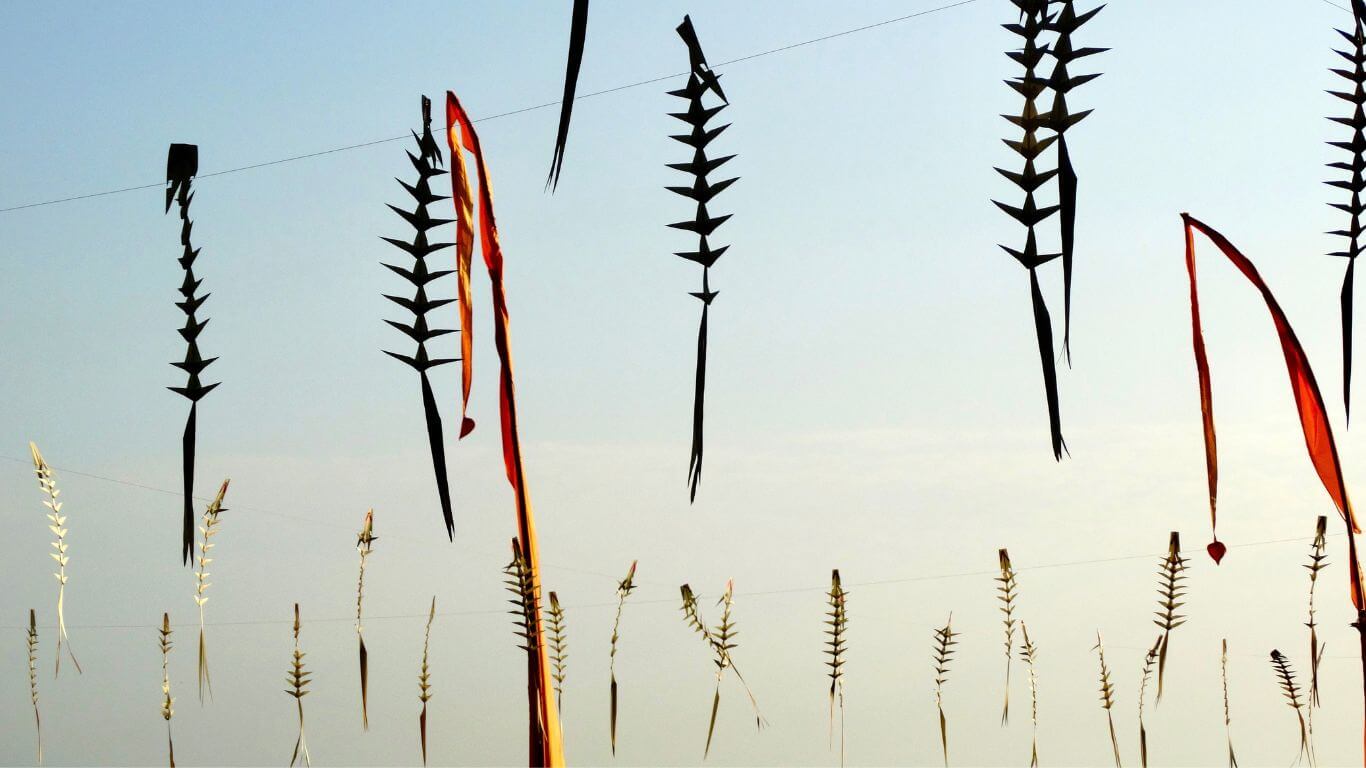
Decorated bamboo poles (penjor) sway in the wind, streets smell of incense, and everywhere you go, you can feel the sacred heartbeat of a ceremony in Bali.

📎 Discover more about Galungan and Kuningan

📅 Next dates:

  • November 19 & 29, 2025

  • June 17 & 27, 2026

Saraswati, Pagerwesi & Tumpek – the sacred cycle of knowledge and protection

These do not have a fixed date, but change according to the Pawukon calendar and celebrate specific aspects:

  • Saraswati – a festival of knowledge and learning. Children bring offerings to books.
  • Pagerwesi – a spiritual day dedicated to the protection of the soul.
  • Tumpek – days honoring animals, instruments, trees… and even scooters!

Hari Saraswati – the day of knowledge

Every 210 days, Bali celebrates Saraswati Day, dedicated to the goddess of wisdom and art.
Schools transform into temples of learning: books are honored, not opened; children bring offerings of flowers and rice to thank the goddess for knowledge.

It’s a ceremony in Bali that touches both the spiritual and the everyday — a reminder that learning is sacred.

📅 Next Saraswati: April 4, 2026

Who is Saraswati for the Balinese?

Saraswati is one of the most beloved deities in Hinduism. She’s the goddess of knowledge, wisdom, art, and music — the divine source of creativity and learning.
Her name comes from “saras” (flow) and “wati” (she who possesses), meaning “the one who holds the flow of knowledge.”

For the Balinese, Saraswati is the embodiment of:

  • knowledge

  • art

  • music

  • wisdom

She’s the consort of Brahma, the creator god, and represents the energy that brings thought, inspiration, and learning to life. In Bali, Saraswati holds a special place because education and the passing on of cultural and spiritual wisdom are deeply valued.

The symbols of Saraswati

In Balinese temples and offerings, Saraswati is often shown as a radiant goddess dressed in white — a color symbolizing purity — sitting or standing on a lotus flower, the symbol of supreme knowledge.

In her hands, she carries her sacred symbols:
a holy book, representing eternal knowledge,
a vina (a traditional Indian string instrument), symbolizing the harmony of art and music,
and a rosary (mala) used in meditation, representing spiritual wisdom.

She’s often accompanied by a swan or peacock, symbols of grace and beauty.

Saraswati Day in schools

If you happen to be in Bali during Hari Saraswati, you’ll immediately notice how special this ceremony in Bali feels — especially for children.
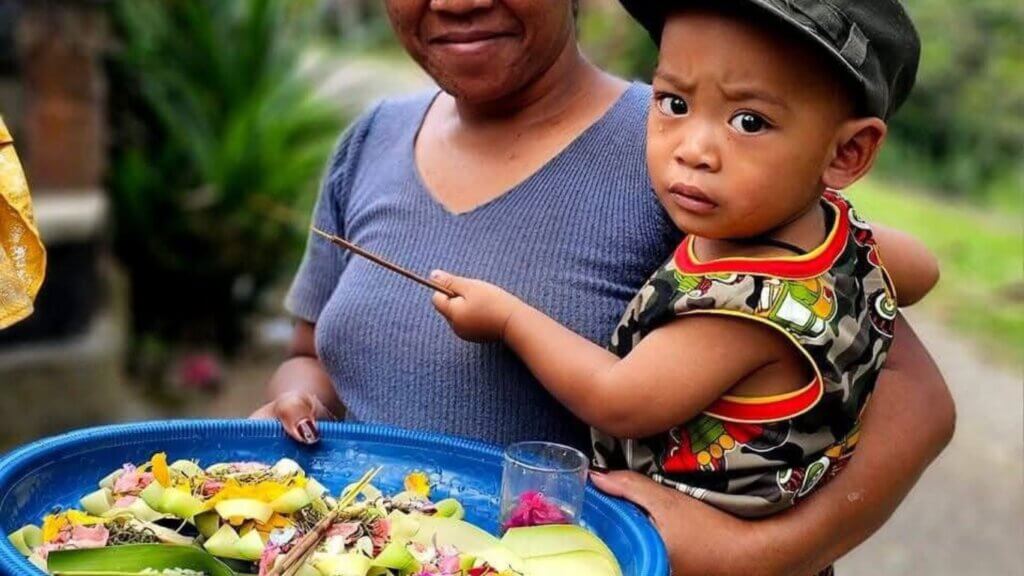
Schools become the beating heart of the celebration: kids arrive dressed in traditional Balinese clothes, carrying small colorful offerings made of flowers, rice, and incense.

There are no lessons that day — and yes, the kids love it! — because the books themselves become the focus of the ritual. Instead of being opened, they’re decorated and blessed as if they were living beings worthy of respect. Teachers lead simple but meaningful ceremonies, reminding everyone of the importance of Saraswati and the sacred power of knowledge.

For a traveling family, this is one of the most beautiful ceremonies in Bali to witness. Just stop by a school or a local temple and you’ll see smiles, music, and flowers filling the air. Traveling kids are always fascinated — they instantly understand that here, books and learning are sacred, celebrated with joy and devotion.

📅 Next Saraswati Day in Bali:
April 4, 2026

Hari Pagerwesi – the day that protects knowledge

A few days after Saraswati comes Hari Pagerwesi, known as the “day of the protection of knowledge.”
If Saraswati represents the light of wisdom, Pagerwesi is the reminder that this light must be guarded against darkness and ignorance.

The name Pagerwesi literally means “iron fence” — a symbol of the invisible barrier people build to protect spiritual strength from negative influences.
During this ceremony in Bali, Balinese families pray to Sanghyang Pramesti Guru (God as the Supreme Teacher) and give thanks for the guidance of spiritual wisdom.

Offerings are also made to ancestors, and rituals take place both in family temples (sanggah) and community shrines. The atmosphere is quiet yet powerful — a reminder that knowledge isn’t just something to acquire, but something sacred to protect and share.

📅 Next Pagerwesi in Bali:
April 8, 2026

Tumpek festivals

Every 35 days, Balinese people celebrate Tumpek Days — small, joyful ceremonies in Bali dedicated to honoring everything that gives life meaning: objects, animals, music, and nature itself.

  • Tumpek Krulut: dedicated to musical instruments, masks, and ceremonial costumes → January 3, 2026 & August 1, 2026

  • Tumpek Kandang: for domestic animals and livestock → February 7, 2026 & September 5, 2026

  • Tumpek Wayang: for shadow puppets → March 14, 2026 & October 10, 2026

  • Tumpek Landep: for metal objects like cars, knives, and even TVs → April 18, 2026 & November 14, 2026

  • Tumpek Uduh: for trees and plants → October 25, 2025; May 23, 2026; December 19, 2026

Each of these ceremonies in Bali is a small window into how the island connects spirituality with daily life — a world where even your scooter or kitchen knife can receive a flower offering.

August 17 – Indonesia’s Independence Day

On August 17, Bali (and all of Indonesia) celebrates Hari Kemerdekaan, the country’s Independence Day.
It’s not a religious celebration, but it’s still full of rituals and community spirit — a mix of official parades and cheerful village gatherings.

You’ll see:

  • Red and white flags everywhere. The national colors cover every corner — homes, temples, scooters, and even food stalls.

  • Village games (perlombaan): sack races, climbing slippery poles to grab prizes (panjat pinang), and hilarious eating contests with giant crackers (krupuk) hanging from strings.

  • Official ceremonies: morning parades, flag-raising, and national hymns in schools and town squares.

As the sun sets, the mood shifts to pure celebration — live music, Balinese dances, street food, and markets.

Even though it’s not a traditional ceremony in Bali, it still feels deeply local. You’ll often spot temples decorated with the colors of the Indonesian flag — because in Bali, there’s always a reason to make an offering and celebrate.

It’s one of those moments that make you smile and think: there really is no place like this island.

Nyepi Laut in Nusa Penida

You’ve probably already heard about Nyepi, the famous Day of Silence when all of Bali completely shuts down for 24 hours. But what most travelers don’t know is that there’s also a “marine version” of this day — called Nyepi Laut (or Nyepi Segara).
It’s one of the most unique ceremonies in Bali, and it happens only on Bali’s three sister islands: Nusa Penida, Nusa Lembongan, and Nusa Ceningan.

During Nyepi Laut, the sea itself falls silent.
No boats leave the harbors, there are no ferries between the islands, no diving or snorkeling — even walking on the beach is forbidden. Everything stops to honor Dewa Baruna, the god of the oceans, and to ask for balance, protection, and gratitude towards the sea.

It’s a moment of deep calm and respect — a powerful reminder that life on these islands depends entirely on the ocean’s rhythm.

The origins of Nyepi Laut

The roots of this ceremony in Bali date back to the 17th century, during the reign of Dalem Waturenggong in the Klungkung region.
On this sacred day, the local community gathers to meditate and reflect on the spirit of the ocean. People dress in traditional Balinese attire — sarongs to cover the legs and modest shirts to cover the shoulders — as a sign of reverence.

📅 Nyepi Laut 2025 in Nusa Penida will take place on October 7, 2025.

The night before: Karya Ngusaba Alit Jagat Nusa Penida

Nyepi Laut is part of a larger ceremony in Bali known as Karya Ngusaba Alit Jagat Nusa Penida, which begins the evening before, on the full moon of October 6, at the sacred Pura Penataran Ped temple.

During this night, villagers offer the Banten Pakelem, a sea ceremony dedicated to Ida Sang Hyang Kala Sunya, invoking the Tirtha Amerta — “the water of life” believed to flow in the depths of the ocean.

For the ritual to be complete, the sea must remain calm. That’s why the following day, the entire island observes Nyepi Segara — 24 hours of silence and stillness, from 6 a.m. on October 7 until 6 a.m. the next morning.

It’s not just a pause; it’s a collective breath shared with the ocean — one of those moments when you feel how sacred and alive nature truly is.

Odalan in Bali

Every Balinese temple has a special date — the day it was “born.”
That’s when the Odalan ceremony in Bali takes place, one of the island’s most heartfelt spiritual events. According to the Pawukon calendar, which follows a 210-day cycle, every temple celebrates its anniversary twice a year, symbolically welcoming the gods as they return to visit.

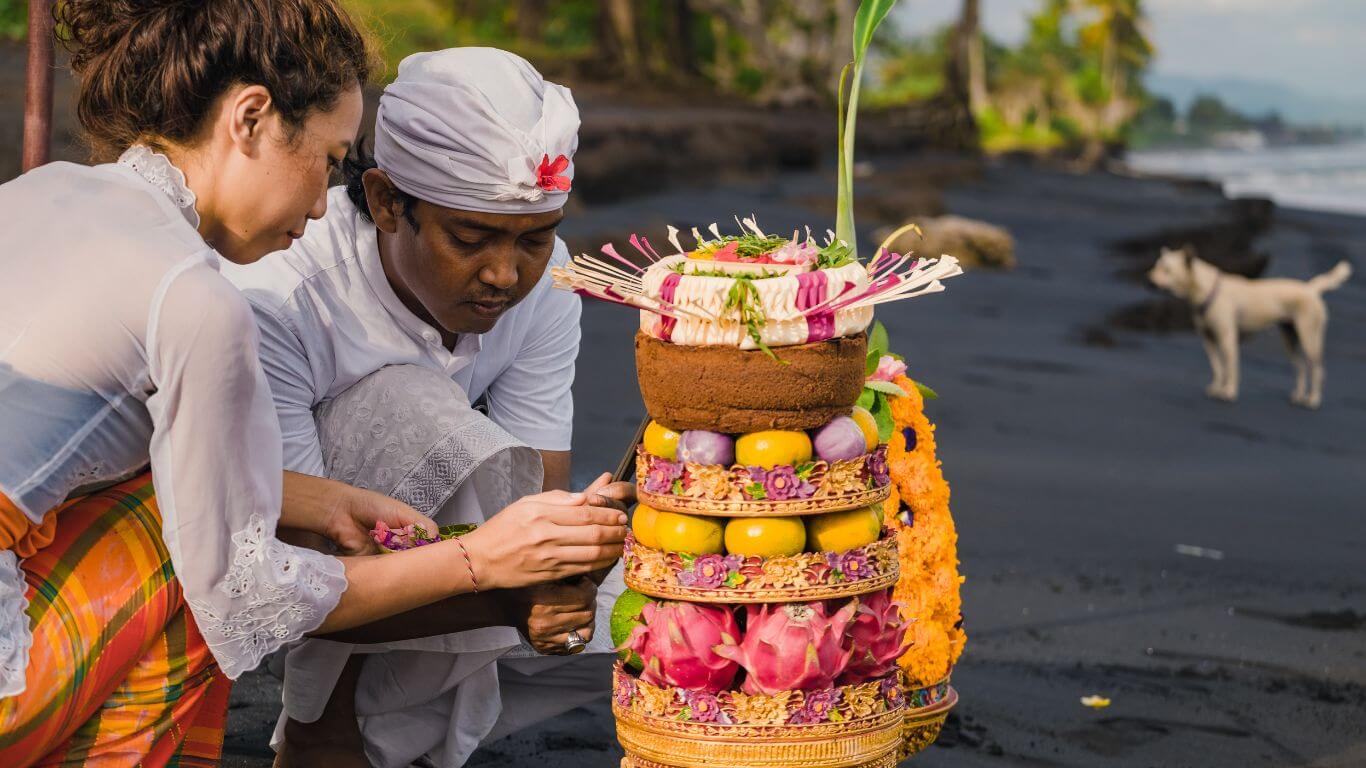
During an Odalan, temples overflow with offerings, flowers, incense, and the mesmerizing sound of gamelan music.
Women balance tall towers of fruit and gifts on their heads, while men take part in prayers and sacred dances.
Some of these ceremonies in Bali last just a few days, while others unfold over several weeks — turning entire villages into a whirlwind of colors, scents, and devotion.

But Odalan is more than a religious ritual — it’s also a celebration of community.
After the prayers, people gather to chat, share food, laugh, and reconnect.
In Bali, where spirituality blends seamlessly with daily life, each Odalan ceremony is a reminder of the deep bond between the Balinese people, their gods, and each other.

The full moon magic in Bali

In Bali, the full moon is never just an astronomical event — it’s a sacred moment, filled with energy and symbolism.
Balinese people call it Purnama, and every month, when the moon shines over temples and rice fields, the island glows with prayers, offerings, and the soft scent of incense.

It’s believed that the moonlight brings blessings and purification — a time to give thanks to the gods and ask for balance in everyday life.
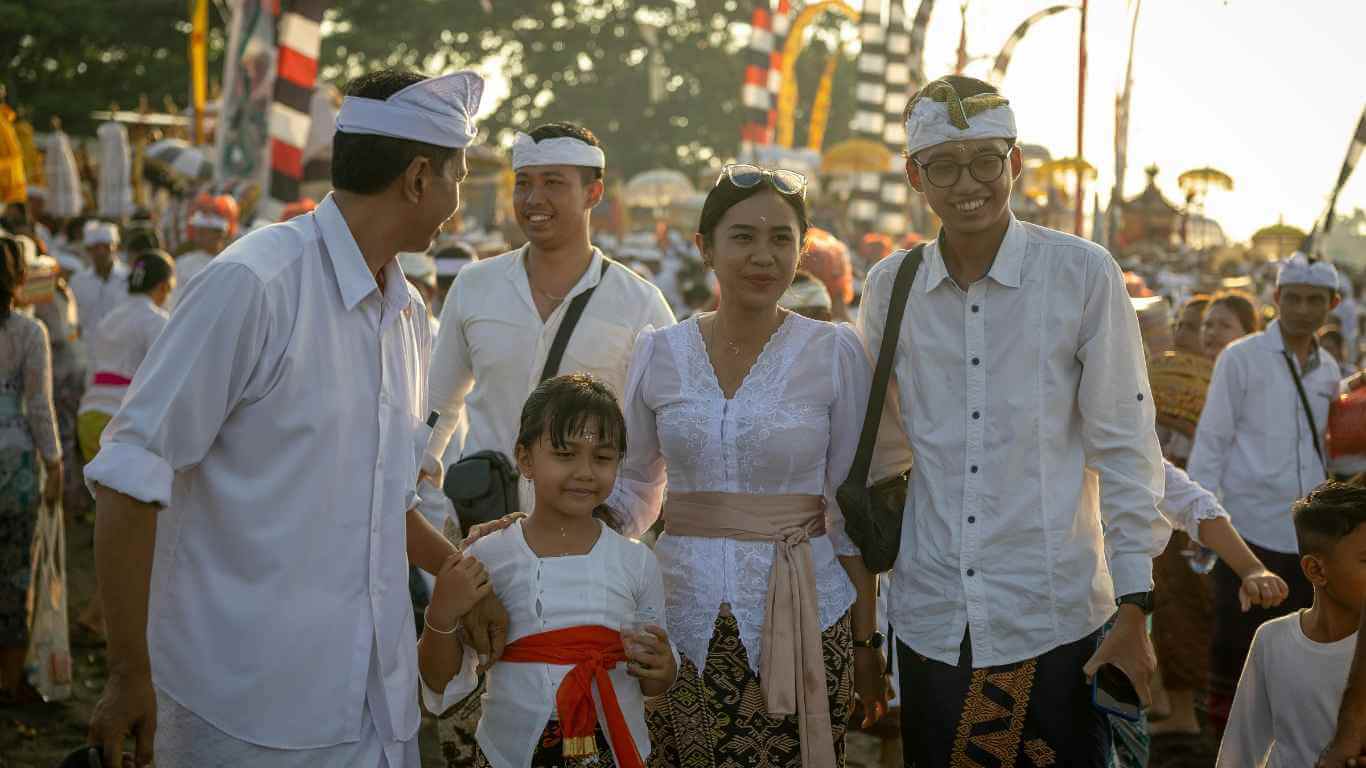
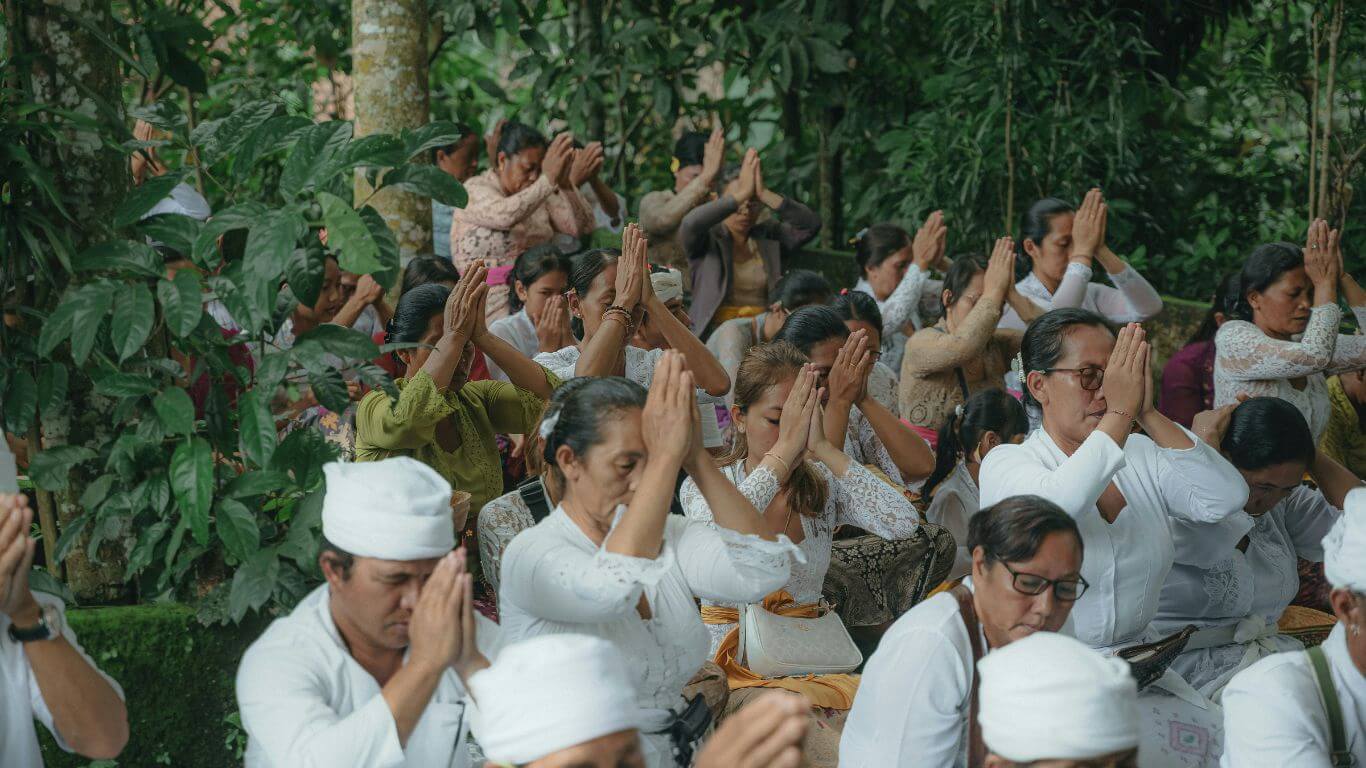
During this ceremony in Bali, families visit temples wearing traditional attire, carrying baskets filled with flowers, fruits, and sweet rice cakes. Priests chant mantras, bells echo through the air, and for a moment, everything slows down — as if the entire island breathes in sync with the moon.

The October full moon: the most powerful of the year

Among all full moons, the one in October is considered the most powerful — and the most awaited.
This year, the October full moon (October 7, 2025) coincides with one of the most significant ceremonies in Bali: the Karya Ngusaba Alit Jagat Nusa Penida, which takes place the night before Nyepi Laut.

According to tradition, this is the night when the line between the human and divine worlds grows thin, and spiritual energy reaches its peak.
It’s said that on this night, the moon reflects the light of Tirtha Amerta, the sacred water that gives life and purifies all beings.

Many Balinese use this time to pray, meditate, or simply sit by the ocean in silence, letting the moonlight wash over them.

If you happen to be in Bali during this period, let the moon be your guide.
Turn off the lights, sit outside, and watch how everything around you transforms — the song of the crickets, the shimmer on the water, the silver glow on the palm trees.
It’s one of those moments that makes you understand how deeply Bali’s ceremonies and nature’s invisible rhythms are woven together.

How to explain Balinese ceremonies to kids

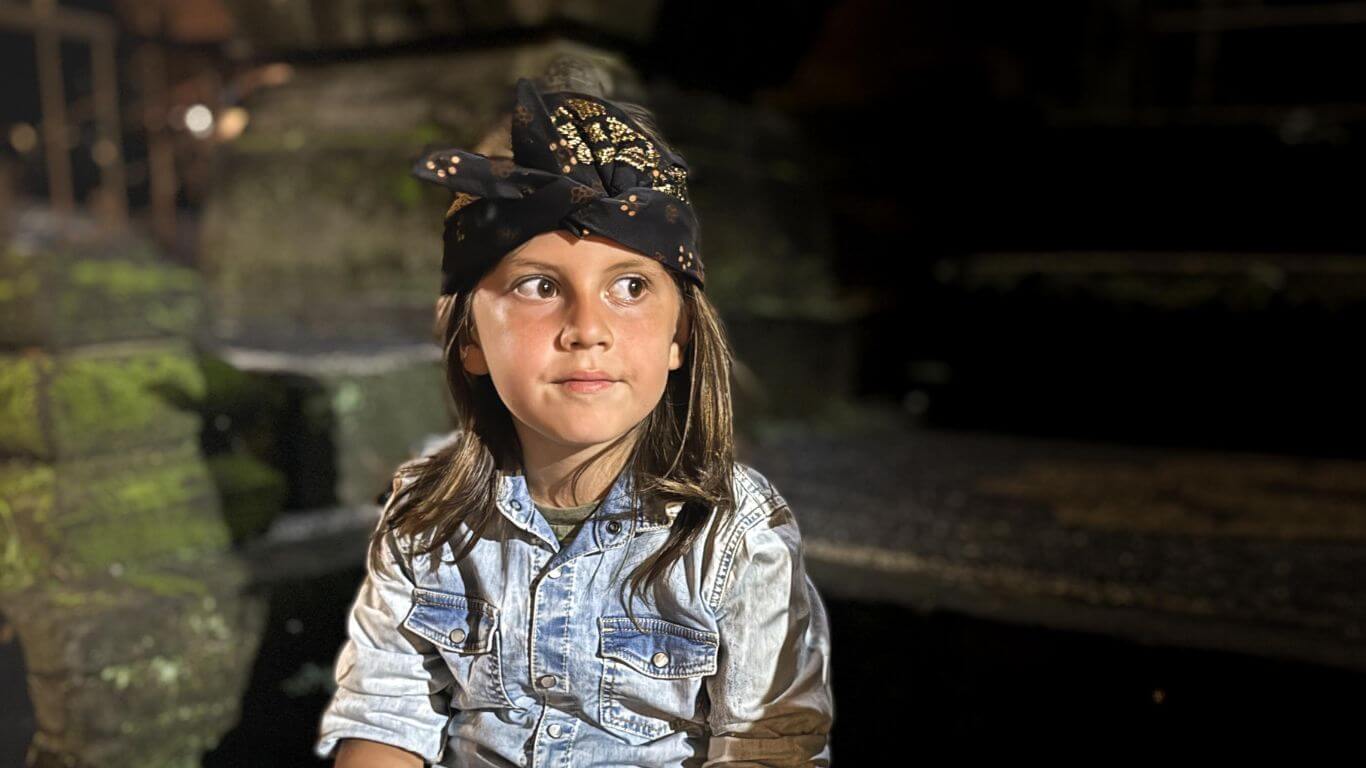
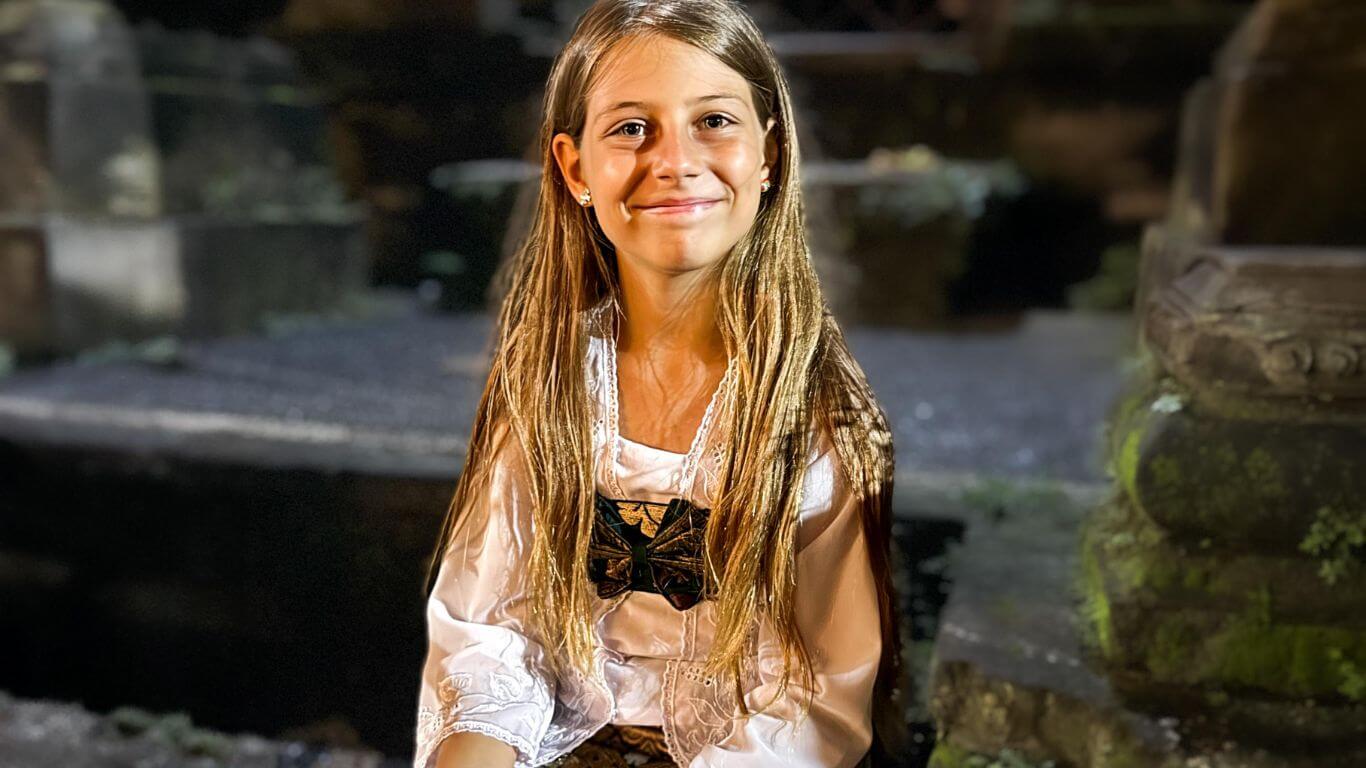
Aldo and Giulia live fully immersed in this sacred, folkloric, and deeply felt world.
Through their wide, curious eyes, we’ve learned that for children:

  • spirituality is play, curiosity, and participation,

  • no celebration is ever just an event — it’s a moment where the community meets the divine,

  • all it takes is respect and observation to feel part of it.

Festivals as sacred art

In Bali, dance, song, offerings, and music are prayers in motion.
Many performances are held only during special celebrations — often inside temples, illuminated by sunset light or by the glow of fire.

You don’t need to understand the language to be moved.
One single dance can touch you deeply — it’s pure beauty that speaks for itself.

📎 Discover the art behind offerings, dances, and every ceremony in Bali.


Why it does matter to understand the festivals in Bali

Festivals and ceremonies in Bali are not tourist attractions — they are sacred moments that define the spiritual rhythm of the island.
Taking part in them respectfully means immersing yourself in the true Balinese culture.
It’s a chance to experience something real, emotional, and profoundly human.

The Balinese calendar: a sacred year to experience

There are no ordinary days in Bali.
Every week can bring a ritual, a stick of incense burning, a shared smile.
Every ceremony in Bali reminds you that life itself can be a celebration — if only you learn to see the sacred in the everyday.

Balinese festivals teach us to live with our eyes and hearts wide open.
Choose to experience them. They will change you.


Planning a trip to Bali with kids?

From mystical temples to the rice fields of Sidemen, from local markets to beaches: Bali is a family-sized adventure waiting for you. I’ve gathered practical tips, authentic stops, and low-budget ideas to help you discover the island with curious eyes and light backpacks.

And if you want to go even deeper, to discover the Real Bali — the one you won’t find in brochures — I recommend Viaggiaibali.com: a complete guide for those who dream of truly living it, with a sustainable and respectful eye towards local communities.

Read all articles about Bali with kids →
Go to Viaggiaibali.com →

Latest Bali post

Long Stopover AT Singapore airport

Long Stopover at Singapore Airport with Kids How We Survived (and Had Fun) Welcome to our long stopover at Singapore Airport with …

How to live in Bali with kids

Living in Bali with Kids (without working in fancy cafés) Living in Bali with Kids (without working in fancy cafés) If you …
What is sambal in balinese kitchen?

19 recipes to fall in love with sambal and Indonesian food 19 recipes to fall in love with sambal and Indonesian food …
Complete guide to the best rice fields in Ubud The best rice fields in Ubud: where to find the greenest and most …
Canggu with kids? Not all bad! 

Is it really worth visiting Canggu with kids or better to skip it? Worth Visiting Canggu with Kids or Better to Avoid …
Sustainable tourism Bali: is it really possible or just marketing? Sustainable Tourism in Bali: Is it Really Possible or Just Marketing? In …

10 alternatives to Bali: authentic destinations in Indonesia Discover 10 alternatives to Bali in Indonesia. The Bali overtourism crisis has reached a …
Why it’s important to listen to the Balinese voice Why it’s important to listen to the Balinese voice When we talk about …
Living as an Expat in Bali: Privilege or Problem?

Living as an Expat in Bali: Privilege or Problem? Our Perspective on the Island We live as expats in Bali and we …

What’s really happening in Bali’s tourist areas? Ubud, Canggu, Seminyak and much more The most popular tourist areas in Bali, like Ubud, …

Indonesia can’t take it anymore: overtourism in Bali Bali can’t take it anymore: the overtourism that’s killing the island’s soul Bali can’t …
Galungan and Kuningan in Bali: when the gods descend to earth Galungan and Kuningan in Bali when the gods descend to earth …

Nyepi in Bali the day the island goes dark (and you wake up inside) Have you ever lived a day when the …

Bali dance

THIS POST IS COMING SOON! IF YOU ARE WANDERING WHERE WE ARE: DON’T WORRY ABOUTR US! yOU CAN PROBABLY FIND US DANCING …
What They Don’t Tell You About Ceremonies, Spirits, and Everyday Life of Religion in Bali What they don’t tell you about ceremonies, …
We’re still searching for the best words to describe this powerful Balinese ritual… Stay tuned for the full article soon! In the …
what is a sarong in Bali? the story beyond the piece of cloth The sarong in Bali is an ancient, sacred, everyday …

Why the number 3 is so important in Bali (and the story behind the Balinese trinity) There’s one thing you’ll notice immediately …
What to eat in Bali with kids: nasi goreng, satay, and lots of weird fruit What to eat in Bali with kids …
What to do when it rains in Ubud? Here’s what you can do in Ubud during the rainy season What to do …

Ubud off the beaten path: authentic places to discover Is it still possible to visit a non-touristy area of Ubud? In my …
Sidemen in Bali with kids: authentic nature among rice fields, temples, and adventure What to do in Sidemen with kids where time …
Family visa for Bali

Family visa for Bali: which one to choose Visa for families in Bali: which one to choose practical guide 2025 If you …
Discover The Secrets Of Rice Harvesting In Bali That Few Tourists Know Discover The Secrets Of Rice Harvesting In Bali That Few …

What you really need to enter Bali: no panic, here’s the ultimate checklist 4 must have in Bali What you really need …
Before Going to Bali with Kids: A Conscious Guide for an Authentic Trip Things to Know Before Going to Bali A Practical …

The world of offerings in Bali The world of offerings in Bali Among spirituality, tradition, and respect, discover their language of love …
Ubud, the Cultural Capital of Bali The Ubud Market: The most spectacular on the island. Travelers from all over the world come …

Uluwatu the Surfing Paradise Breathtaking beaches and secret surf spots Bali is famous for its spectacular waves and dream surfing destinations, but …

Traveling in Asia by Scooter How to Travel Safely with Kids Traveling in Asia by scooter is an adventure you shouldn’t miss, …

Tropical Paradise for Families Exploring the Gili Islands with Kids The Gili Islands, a trio of small islands off the coast of …

A Magical Adventure on Komodo Island A Boat Tour with Kids The Komodo archipelago is located in central Indonesia, between the islands …
Explore Ubud for Free What to See for Free in Ubud with Kids Welcome to Miniwanderlust Team, your guide for family travels! …

North of Bali with kids

Exploring the Authentic Side of Bali: The North of Bali with Kids Hello wanderlusters! In this article, I will take you to …
Surfing Paradise: The Best Surf Spot in Bali Hello Wanderluster, If you’re passionate about surfing, Bali is your tropical paradise. This Indonesian …

Gili Islands: Family Paradise Between Beaches and Adventures Hello to all traveling parents! If you’re looking for a unique adventure with your …
Waterfalls in Bali with kids

Waterfalls in Bali with kids Discover Top Adventures with Your Little Explorers Welcome, adventurous parents and little explorers, to this article where …
Incredible spots to take photos in Bali

Preparatevi a scoprire i posti più fotografati dell'isola e a catturare ricordi indimenticabili con il vostro cellulare. Ecco dove andare!

Scroll to Top