The world of offerings in Bali
Among spirituality, tradition, and respect, discover their language of love
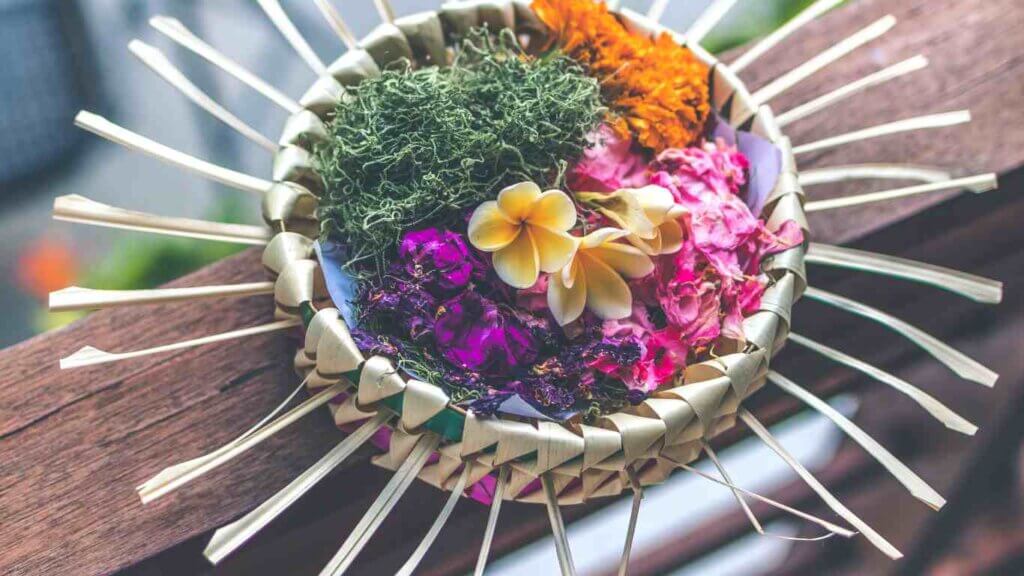
When you arrive in Bali, one of the first things you’ll notice everywhere — on sidewalks, in front of shops, even on scooters — are small, colorful offerings. They’re not trash, nor mere decorations. They’re canang sari, and they reveal a profound side of Balinese culture.
If you’re wondering what these offerings in Bali are, why people make them, and how you should behave around them, you’re in the right place.
In this article about offerings in Bali, we’ll talk about:
What are Balinese offerings (canang sari)
🌿 The meaning of Balinese offerings
Balinese offerings are called canang sari and are a daily gesture of devotion. They’re mostly prepared by women and serve to maintain the balance between good and evil, and between the gods and the spirits of the unseen world.
In Bali, every object included in an offering has a specific symbolic meaning. The canang sari, which might look like simple baskets of flowers, are actually small works of balance and devotion. Here’s what they contain—and what each element represents:
The woven base made of palm leaves (ceper or bokor): symbolizes the connection between humans and nature. The square shape represents the four cardinal directions, a fundamental concept in Balinese Hinduism.
The colorful flowers: each color is dedicated to a specific deity:
White (usually frangipani flowers): for Iswara, east direction
Red: for Brahma, south direction
Yellow: for Mahadeva, west direction
Blue or green: for Vishnu, north direction
The flowers aren’t chosen randomly; they’re placed intentionally, according to the direction and the deity being honored.
The sari (essence): often represented by a pinch of rice, a small biscuit, or a coin. It’s the soul of the offering, the element that makes it “active.”
Incense: lit at the end of the ritual, it has the purpose of “carrying” the offering to the gods. The rising smoke is like a message ascending to the heavens.
All of this is prepared with calm, focus, and clear intention: to bring harmony between humans, nature, and the divine. It’s not just a religious gesture but a daily practice of gratitude and mindfulness.
🙏 When and where are offerings made
Canang sari are made every day, early in the morning. But on ceremonial days or during the full moon, you’ll see them everywhere—even on the streets or on car dashboards.
They are placed:
in front of houses, temples, shops, and restaurants
at street corners, to protect against demons
on household altars and in shrines in the rice fields

How much do the offerings cost (and why are they so important)
💸 The cost of offerings in Bali
Preparing an offering can cost anywhere from a few cents to several euros, depending on how elaborate it is. A Balinese family spends on average up to 30% of their income on religious offerings. It’s a huge investment—but one made with joy and respect.
❤️ Why they really make them
It’s not just a tradition. It’s a way to keep the universe in balance. Balinese Hinduism believes everything is connected: people, nature, and spirits. Offerings are a way to say “thank you” and ask for protection. It’s a gesture of love, humility, and connection.

Balinese Hinduism: a unique religion
🕊️ It’s not Indian Hinduism
Bali follows a unique form of Hinduism called Hindu Dharma, which blends Indian traditions, animism, and indigenous beliefs. It’s not the same as the Hinduism you find in India.
Balinese people believe in:
a supreme god (Sang Hyang Widhi)
many lesser deities (like Shiva, Vishnu, Brahma)
spirits of nature, who dwell in trees, rivers, and mountains
🌠 The concept of balance
Everything revolves around the concept of Rwa Bhineda: good and evil, light and darkness, life and death. The goal of life is to maintain balance—not to eliminate evil. That’s why offerings are so important: they nourish both sides of the universe.
📕 Daily rituals and ceremonies
Every Balinese person has a sacred calendar that guides daily life, including:
ceremonies for the deceased, newborns, the home, and the land
purification rituals and special offerings with every lunar cycle
public celebrations and temple festivals (Odalan, Galungan, Nyepi…)

How to deal with offers in Bali
| ❌ What NOT to do | 🙏 What to do instead |
|---|---|
| Don’t step on the offerings (even if they’re on the ground) | Walk past them respectfully |
| Don’t touch or move them | If you accidentally bump into one, say sorry (even just in your mind) |
| Don’t take them as souvenirs (yes, it really happens!) | Look and observe, but don’t disturb people praying or making offerings |
Canang and Gebogan: what’s the difference between these offerings? 🌺🍌
If you’ve been in Bali for a few days, you’ve probably noticed that not all Balinese offerings are the same. Some are small and found everywhere — on sidewalks, in front of shops, in temples — while others are true colorful “towers” carried in processions. But what’s the difference between a canang and a gebogan?
Canang Sari: the daily offerings
Canang sari are the most common and simple offerings, the ones you see every morning in front of doors, temples, statues, and even on motorbikes or cash registers. They consist of a small woven base made from palm leaves, decorated with colorful flowers, incense, and sometimes a bit of rice, candy, or coins.
They are meant to thank the gods, keep the balance between good and evil, and bring harmony to daily life. Every family prepares dozens of them every day!
Gebogan: the monumental offerings
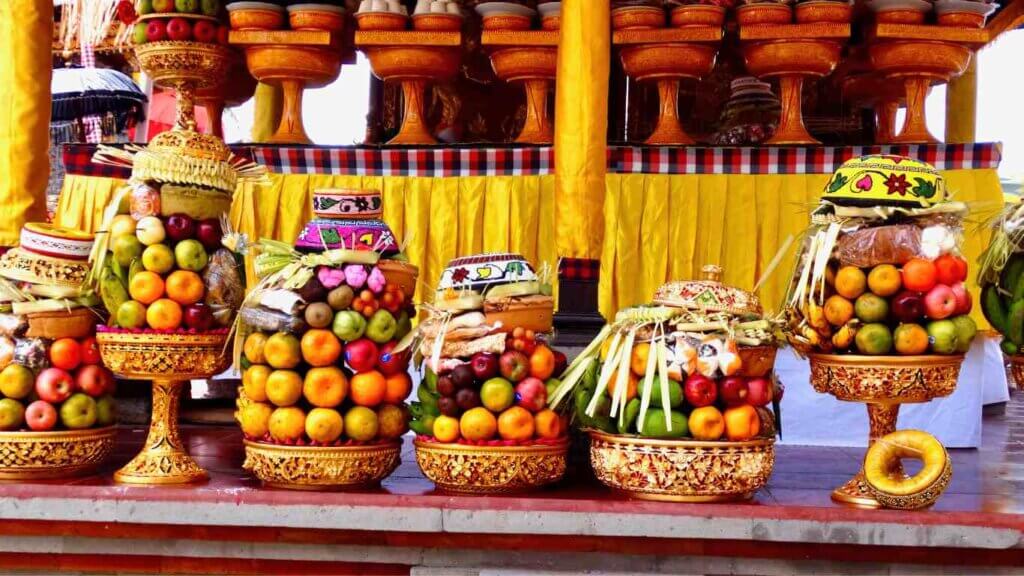
Gebogan are bigger, more spectacular offerings used in important ceremonies and temples. They are actual “towers” made of fruit (bananas, oranges, apples), flowers, Balinese sweets, and symbolic decorations, all carefully stacked on a central support.
Women carry them balanced on their heads during religious processions: a true show of grace and strength.
Authentic experiences to learn how to make offerings in Bali
If you, like me, are fascinated by the colorful offerings decorating every corner of Bali, know that there’s no better way to truly understand their meaning than… trying to make them with your own hands! Here are some authentic experiences on the island where you can learn the art of canang sari and ceremonial offerings, guided by Balinese people who live this tradition every day.
🪷
Canang Sari Workshop – Ubud (Bali Holiday Secrets)
A short but intense experience, perfect if you want to grasp the meaning of offerings without a big time commitment. It lasts about 2 hours and takes place in the traditional family courtyard of a jérop, a Balinese priestess. Besides the hands-on part, there’s a tea break, traditional clothing, and if you’re coming from Kuta or Seminyak, you can opt for pickup and a half-day tour.
👉 Ideal if you want authenticity but have limited time.
Balinese Offering Workshop con Kura‑Kura Bus
A fuller immersion: 7 hours of culture and spirituality. It starts with a visit to a local market to pick materials, then you learn how to make both canang and the more spectacular gebogan. Lunch and pickup from various areas included.
👉 Perfect if you want a full day dedicated to tradition.
Offriging Making all’ARMA Museum & Resort – Ubud
A 2-hour workshop in the beautiful setting of ARMA Museum, Pengosekan. You’ll work with bamboo leaves, palm leaves, and colored paste, learning the symbolic meaning of each element.
👉 Recommended if you’re already in Ubud and want a full cultural experience in an artistic environment.
✨
Soul Bliss Journeys – Offering‑Making
A practical and spiritual workshop combined. You’ll learn the daily offerings to make at home or temples, with a final prayer to truly connect to the ritual’s meaning.
👉 A more intimate and reflective experience, perfect if you’re looking for some inner connection.
Bali Om Tours – Balinese Offering Class
Short on time but curious? This basic 1.5–2 hour class gives you a quick but meaningful introduction to the world of offerings.
👉 Great for families with kids or anyone who wants to add a spiritual touch to their trip without a big time commitment.
Balinese ceremonies: life, death, and everything in between
In Bali, every moment of life is marked by a ceremony. From birth to the passage into the afterlife, each stage is accompanied by sacred rites, music, offerings, dances, and prayers.
Here are some of the most important ceremonies:
Otonan – the Balinese birthday ceremony, based on the Pawukon calendar (every 210 days). It’s celebrated to protect the child from negative spirits and strengthen their karma.
Galungan and Kuningan – two of the biggest religious festivals. Galungan celebrates the victory of dharma (good) over adharma (evil), while Kuningan closes the cycle with special offerings and prayers to the spirits of ancestors.
Melasti – a purification ceremony held before Nyepi (the day of silence). Sacred statues are taken to the sea or lakes to be cleansed.
Ngaben – the Balinese funeral, probably the most spectacular and powerful ceremony. It’s a cremation ritual that frees the soul of the deceased and guides it towards reincarnation. With gamelan music, colorful towers, and flames, it’s a key moment of transition for the whole community.
Odalan – the “birthday party” of every temple. Each village celebrates its Odalan with traditional dances, monumental offerings, and collective prayers.
Balinese ceremonies are not just religious events: they are community gatherings, moments when time seems to stop and everything fills with beauty, rhythm, and spirituality. Even as a traveler, you can join in with respect and curiosity – and maybe you’ll understand a little more of the island’s soul.
Why knowing these traditions changes your trip
Understanding Balinese offerings changes you from the inside. It makes you feel like a guest, not a tourist. It teaches you that spirituality isn’t just meditating in an Instagrammable temple, but offering a little piece of your time, your breath, every day.
Offerings are small acts of invisible love. And once you learn to see them for what they truly are, you won’t be able to look at them without feeling something deep.
👉 If you want to make your trip even more special, MiniLonely Bali will help you turn every stop into an unforgettable adventure!

MiniLonely Bali
A journey through nasi goreng, temples, and religion, discovering the island of the Gods
🐒 Fun facts for kids: did you know…?
🌸 Every flower in the offerings at Bali has a meaning!
In canang sari, flowers aren’t placed randomly: each color represents a different deity. For example, white is for the god Iswara (east), red for Brahma (south), yellow for Mahadeva (west), and blue or green for Vishnu (north).
🍌 The famous gebogan, the huge offerings in Bali, are edible!
After the ceremony, all the fruit and sweets from the bigger offerings are taken home and… eaten by the family! It’s the Balinese way to share the blessings received.
🔥 Incense “activates” the offering
When the offering is ready, a stick of incense is lit: the scent rises to the sky and “calls” the gods, like a fragrant message.
👣 Watch where you walk!
It’s not rude if you see someone stopping to fix an offering on the sidewalk: in Bali, it’s sacred not to step on the canang.
🎨 You can make offerings too!
With a little creativity and colorful flowers, you can try making a canang at home, using leaves, petals, and some incense sticks. It’s a fun, creative activity to do together!
Planning a trip to Bali with kids?
From mystical temples to the rice fields of Sidemen, from local markets to beaches: Bali is a family-sized adventure waiting to be lived. I’ve gathered practical tips, authentic stops, and budget-friendly ideas to help you discover the island with curious eyes and light backpacks.
And if you want to go even deeper, to discover the real Bali, the one you won’t find in brochures, I recommend Viaggiabali.com: a complete guide for those who dream of truly living it, with a sustainable and respectful eye towards local communities.
Read all articles about Bali with kids →Go to Viaggiabali.com →
Latest Bali post
Long Stopover at Singapore Airport with Kids How We Survived (and Had Fun) Welcome to our long stopover at Singapore Airport with …
Living in Bali with Kids (without working in fancy cafés) Living in Bali with Kids (without working in fancy cafés) If you …
19 recipes to fall in love with sambal and Indonesian food 19 recipes to fall in love with sambal and Indonesian food …
Complete guide to the best rice fields in Ubud The best rice fields in Ubud: where to find the greenest and most …
Is it really worth visiting Canggu with kids or better to skip it? Worth Visiting Canggu with Kids or Better to Avoid …
Sustainable tourism Bali: is it really possible or just marketing? Sustainable Tourism in Bali: Is it Really Possible or Just Marketing? In …
10 alternatives to Bali: authentic destinations in Indonesia Discover 10 alternatives to Bali in Indonesia. The Bali overtourism crisis has reached a …
Why it’s important to listen to the Balinese voice Why it’s important to listen to the Balinese voice When we talk about …
Living as an Expat in Bali: Privilege or Problem? Our Perspective on the Island We live as expats in Bali and we …
What’s really happening in Bali’s tourist areas? Ubud, Canggu, Seminyak and much more The most popular tourist areas in Bali, like Ubud, …

Indonesia can’t take it anymore: overtourism in Bali Bali can’t take it anymore: the overtourism that’s killing the island’s soul Bali can’t …
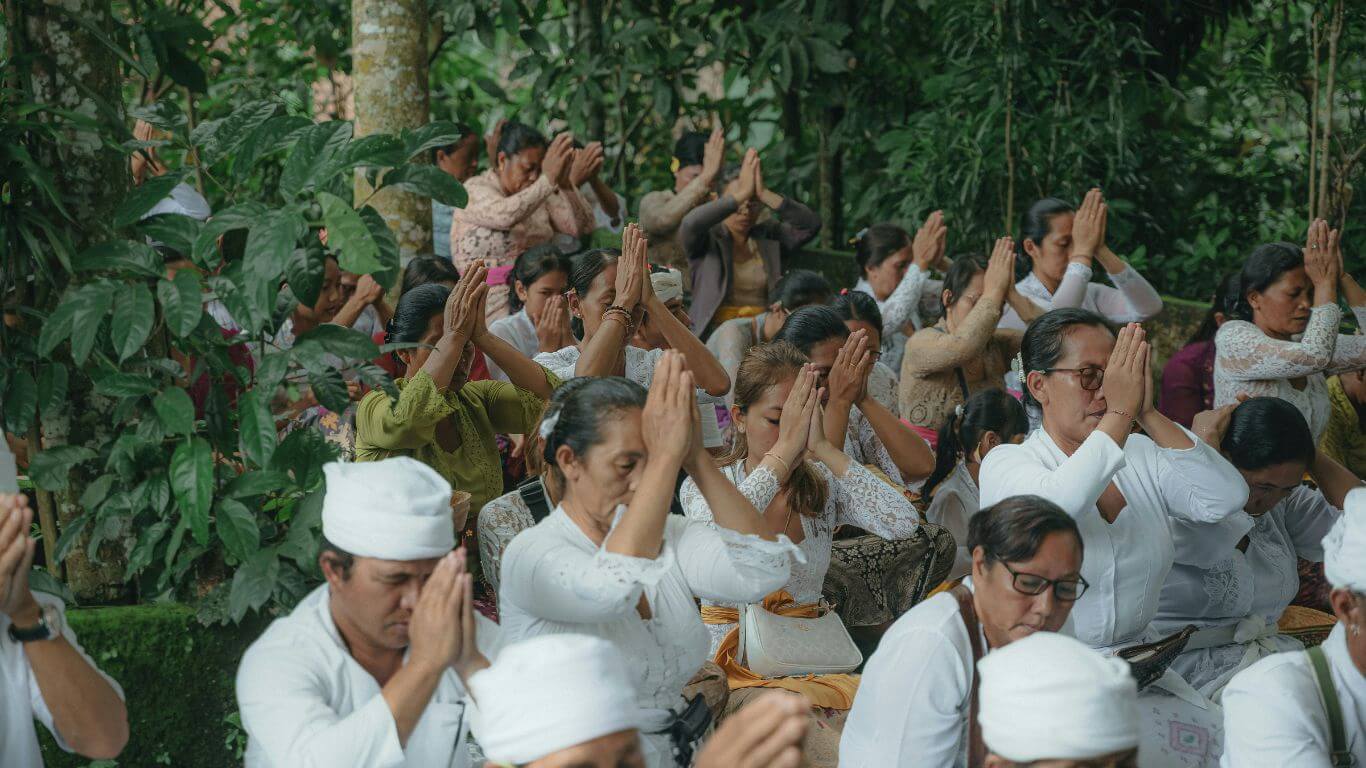
Galungan and Kuningan in Bali: when the gods descend to earth Galungan and Kuningan in Bali when the gods descend to earth …
Nyepi in Bali the day the island goes dark (and you wake up inside) Have you ever lived a day when the …
THIS POST IS COMING SOON! IF YOU ARE WANDERING WHERE WE ARE: DON’T WORRY ABOUTR US! yOU CAN PROBABLY FIND US DANCING …
A year of ceremonies in Bali A year of ceremonies in Bali what really happens behind the island’s sacred celebrations Every year …
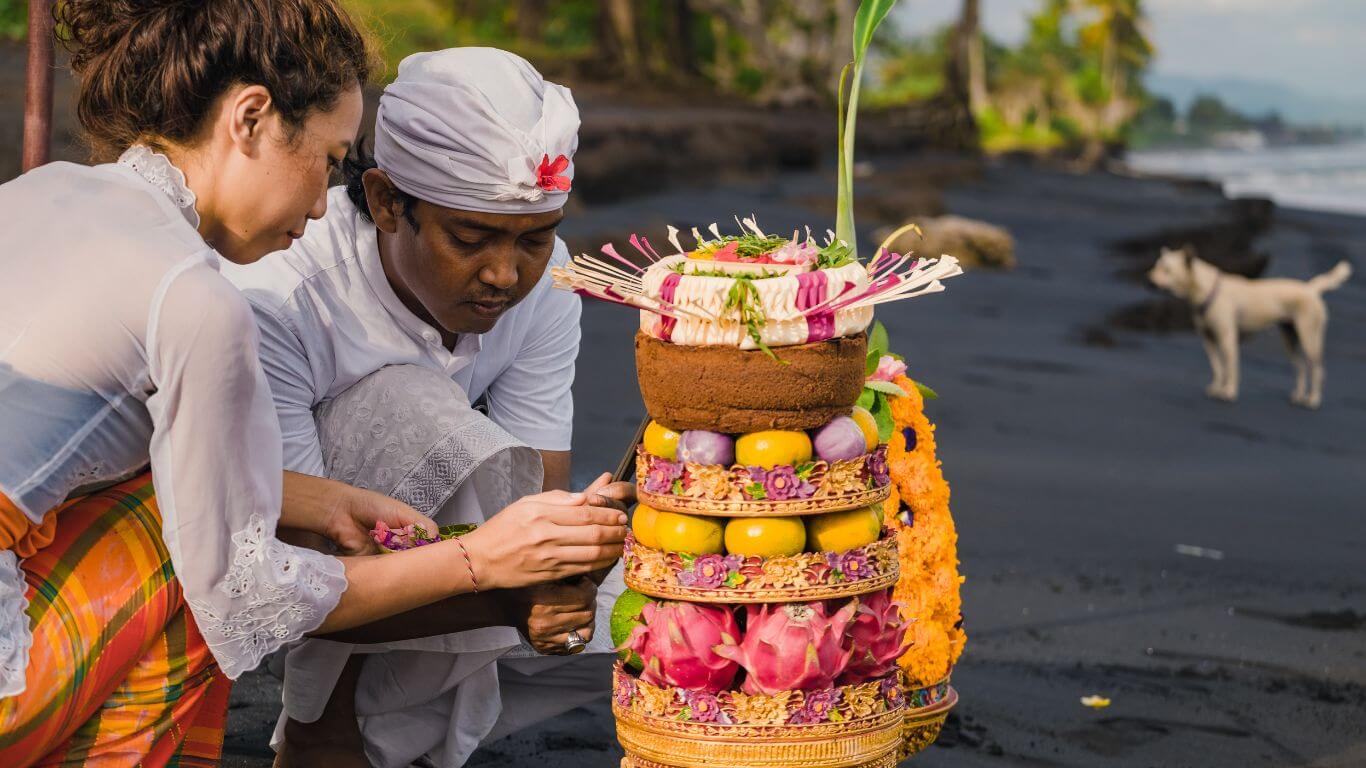
What They Don’t Tell You About Ceremonies, Spirits, and Everyday Life of Religion in Bali What they don’t tell you about ceremonies, …
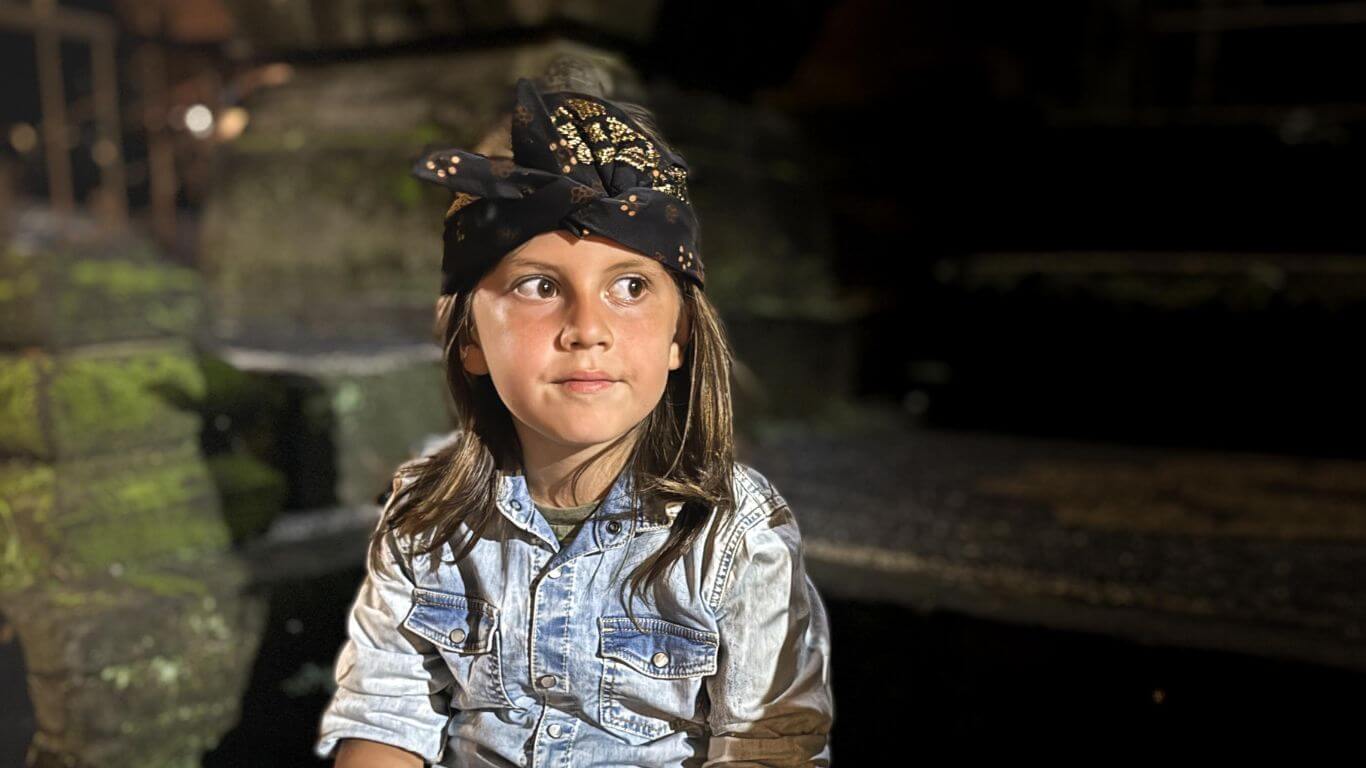
We’re still searching for the best words to describe this powerful Balinese ritual… Stay tuned for the full article soon! In the …
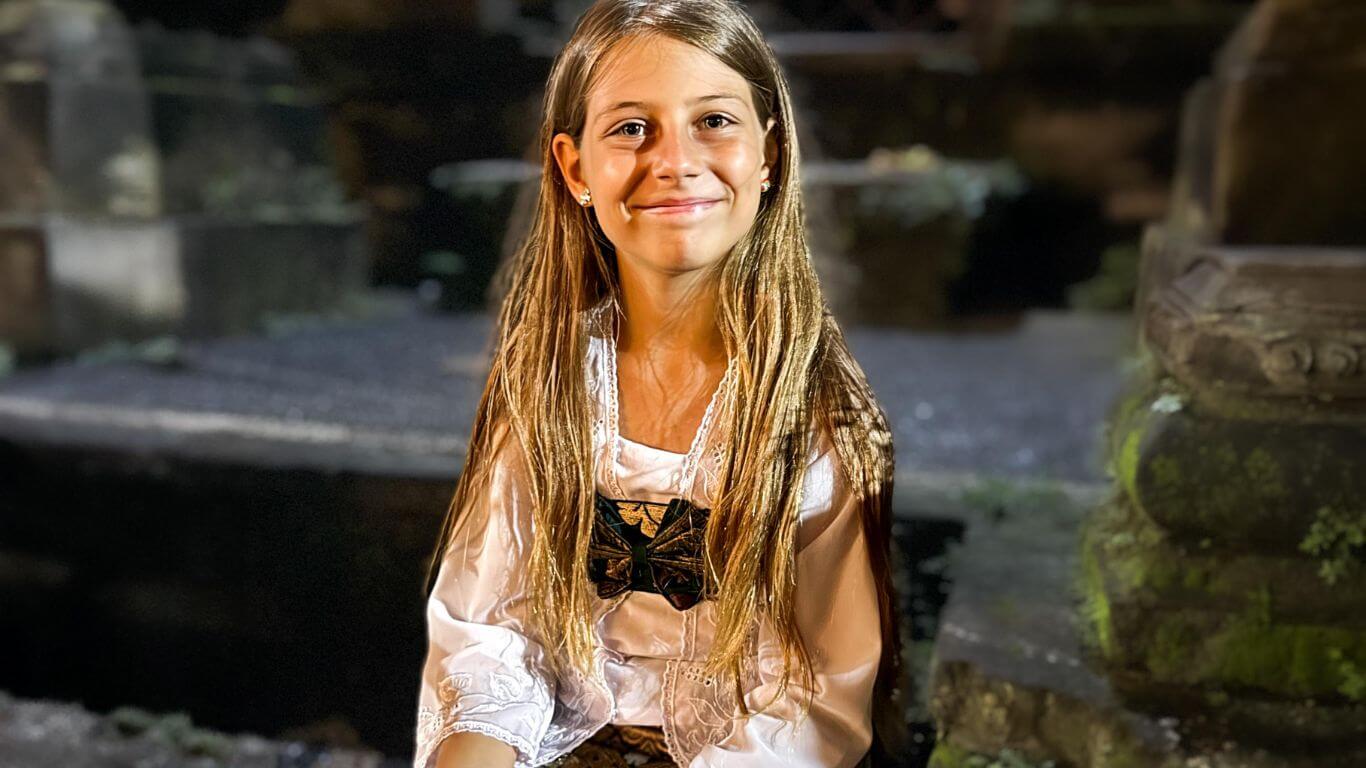
what is a sarong in Bali? the story beyond the piece of cloth The sarong in Bali is an ancient, sacred, everyday …
Why the number 3 is so important in Bali (and the story behind the Balinese trinity) There’s one thing you’ll notice immediately …
What to eat in Bali with kids: nasi goreng, satay, and lots of weird fruit What to eat in Bali with kids …
What to do when it rains in Ubud? Here’s what you can do in Ubud during the rainy season What to do …
Ubud off the beaten path: authentic places to discover Is it still possible to visit a non-touristy area of Ubud? In my …
Sidemen in Bali with kids: authentic nature among rice fields, temples, and adventure What to do in Sidemen with kids where time …

Family visa for Bali: which one to choose Visa for families in Bali: which one to choose practical guide 2025 If you …
Discover The Secrets Of Rice Harvesting In Bali That Few Tourists Know Discover The Secrets Of Rice Harvesting In Bali That Few …
What you really need to enter Bali: no panic, here’s the ultimate checklist 4 must have in Bali What you really need …
Before Going to Bali with Kids: A Conscious Guide for an Authentic Trip Things to Know Before Going to Bali A Practical …
Ubud, the Cultural Capital of Bali The Ubud Market: The most spectacular on the island. Travelers from all over the world come …
Uluwatu the Surfing Paradise Breathtaking beaches and secret surf spots Bali is famous for its spectacular waves and dream surfing destinations, but …
Traveling in Asia by Scooter How to Travel Safely with Kids Traveling in Asia by scooter is an adventure you shouldn’t miss, …
Tropical Paradise for Families Exploring the Gili Islands with Kids The Gili Islands, a trio of small islands off the coast of …
A Magical Adventure on Komodo Island A Boat Tour with Kids The Komodo archipelago is located in central Indonesia, between the islands …
Explore Ubud for Free What to See for Free in Ubud with Kids Welcome to Miniwanderlust Team, your guide for family travels! …
Exploring the Authentic Side of Bali: The North of Bali with Kids Hello wanderlusters! In this article, I will take you to …
Surfing Paradise: The Best Surf Spot in Bali Hello Wanderluster, If you’re passionate about surfing, Bali is your tropical paradise. This Indonesian …

Gili Islands: Family Paradise Between Beaches and Adventures Hello to all traveling parents! If you’re looking for a unique adventure with your …
Waterfalls in Bali with kids Discover Top Adventures with Your Little Explorers Welcome, adventurous parents and little explorers, to this article where …
Preparatevi a scoprire i posti più fotografati dell'isola e a catturare ricordi indimenticabili con il vostro cellulare. Ecco dove andare!

9 thoughts on “The world of offerings in Bali”
Nohu666com, that’s a mouthful! But surprisingly, the platform’s pretty smooth. More games than I expected. Could use more deposit options, but overall not bad. Give it a shot! nohu666com
PHSpinAppLogin, logging in worked without any issues. App runs smoothly, so that’s a plus. If you’re into this kind of thing, give it a shot. phspinapplogin
123winclub, hmm, name sounds promising! Gotta see if it lives up to the hype. Is it a cool group to hang around? Or is just another site that does the opposite? Let’s see what that Winclub vibe is about, find it here: 123winclub
Need some new games? K2gamedownload might be the answer. Seeing some nice titles on there. Tell me what you think! k2gamedownload
Hey mates, tried yo88vina the other day. It’s kinda neat! Registration’s easy and I won a bit. Might be worth a shot. yo88vina
Kubetvip8 é a melhor! Jogos incríveis, pagamentos em dia e um suporte que realmente te ajuda. Não troco por nada kubetvip8.
Alright, folks, finally checked out x89app! It’s got a decent selection, but could use some more variety, yeah? Give x89app a look see.
bmw555 https://www.pokerbmw555.com
Can you be more specific about the content of your article? After reading it, I still have some doubts. Hope you can help me.